
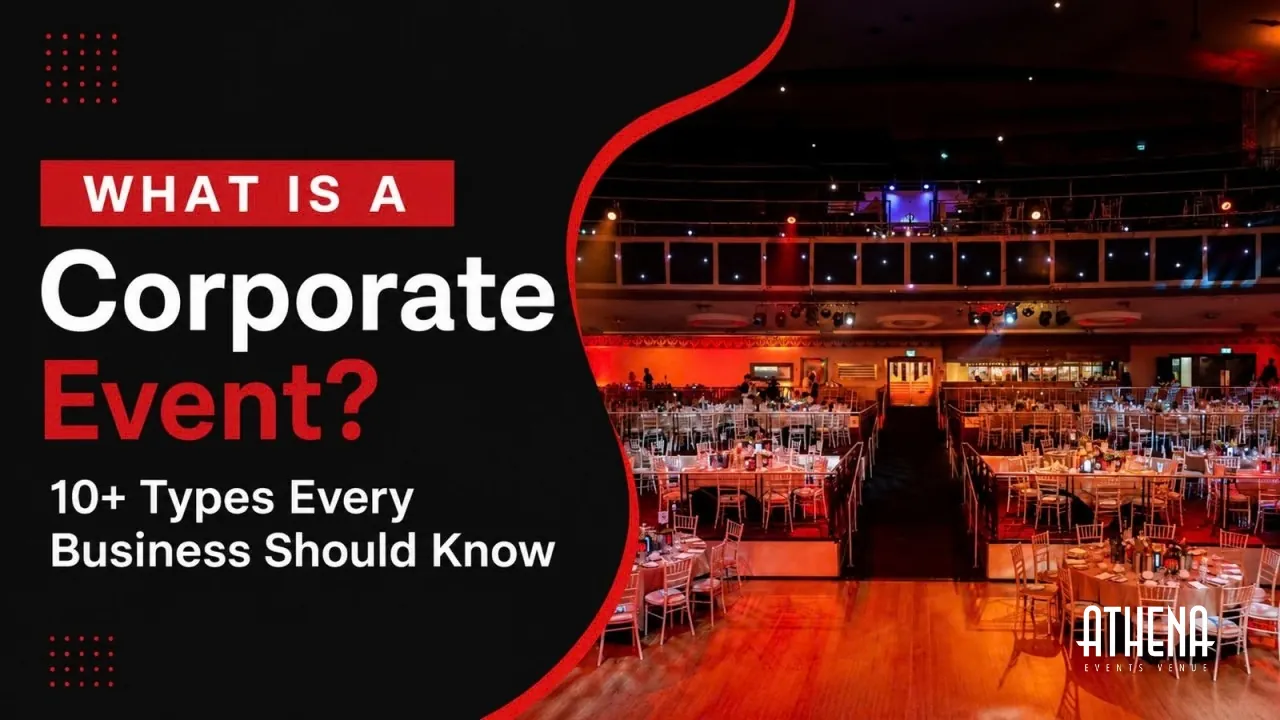
What Is a Corporate Event? 10+ Types Every Business Should Know
14 Nov 2026When most people hear "corporate event," they picture a stiff boardroom meeting or a formal dinner with a handful of executives. That's not the full picture. Corporate events are far more diverse than that, and after working in the events industry for over a decade, we can say the range of formats businesses actually use is wide.
That's what this guide is for.
We're listing out the different types of corporate events, so you know what kind of event actually fits your business. Not every event type suits every business, and picking the right one starts with understanding what your options are.
What Is a Corporate Event?
A corporate event is a gathering organized by a business for a specific professional purpose, such as training employees, launching a product, recognizing achievements, or building relationships with clients and partners.

Unlike a private party or a social occasion, a corporate event is planned around a business outcome, and every decision, from venue to guest list to format, is made to support that outcome.
Corporate events can be internal, meant only for employees, or external, aimed at clients, partners, media, or the public. They can be as small as a 15-person training session or as large as a 2,000-person conference. What ties them together is intent: the business has a specific goal it wants the event to deliver.
Why Businesses Host Corporate Events
Corporate events aren't organized for their own sake. Businesses invest time and budget into them because, done well, they deliver measurable value like:
- Building employee morale and engagement: Events like team outings, recognition ceremonies, and milestone celebrations give staff a reason to feel valued outside their day-to-day work.
- Strengthening client relationships: Client appreciation events and hospitality gatherings give businesses a chance to build trust face-to-face, which is harder to replicate over email or calls.
- Generating leads and business opportunities: Conferences, trade shows, and networking events put a business in front of the right audience and create direct opportunities for new business.
- Reinforcing brand identity: Product launches and brand activations let a business control how it's presented to clients, press, and the public.
- Training and upskilling teams: Structured sessions ensure employees are aligned on skills, processes, or company direction in a focused environment away from daily distractions.
- Marking milestones: Anniversaries, awards, and achievements give a business a reason to reflect on progress and reinforce culture internally.
Key Characteristics of a Corporate Event
Not every gathering a business hosts qualifies as a corporate event in the strict sense. A few traits set them apart from casual or purely social occasions.
Purpose-Driven (Business Goals, Not Just Celebration)
Every corporate event exists to serve a business objective, whether that's closing deals, training staff, or improving retention. Even events that feel celebratory on the surface, like an anniversary party or an awards night, are usually built around a goal:
- Reinforcing culture
- Recognising performance
- Strengthening a relationship with clients
If there's no business rationale behind it, it's not really a corporate event; it's just a party the company happens to be paying for.
Structured Format and Agenda
Corporate events run to a plan. There's typically a defined start and end time, a schedule of sessions or activities, and a clear sequence to the day, whether that's registration, keynote, breakout sessions and networking, or arrival, dinner, awards, and closing remarks.
This structure exists because attendees are there for a reason, and the event needs to deliver on it within a fixed window, unlike a social gathering where the format can be loose and open-ended.
Defined Audience (Employees, Clients, Partners, Media)
Corporate events are planned around a specific audience, and that audience shapes almost every other decision. An internal training session is designed differently from a client hospitality event or a press launch, because the people in the room have different expectations and the business wants different outcomes from each group.
Knowing who the event is for employees, clients, partners, investors, or media is usually the first decision made in the planning process, not an afterthought.
Types of Corporate Events
Here are some types of corporate events:
1. Internal Corporate Events
These are events organized primarily for employees, with the goal of improving culture, skills, or morale within the business.
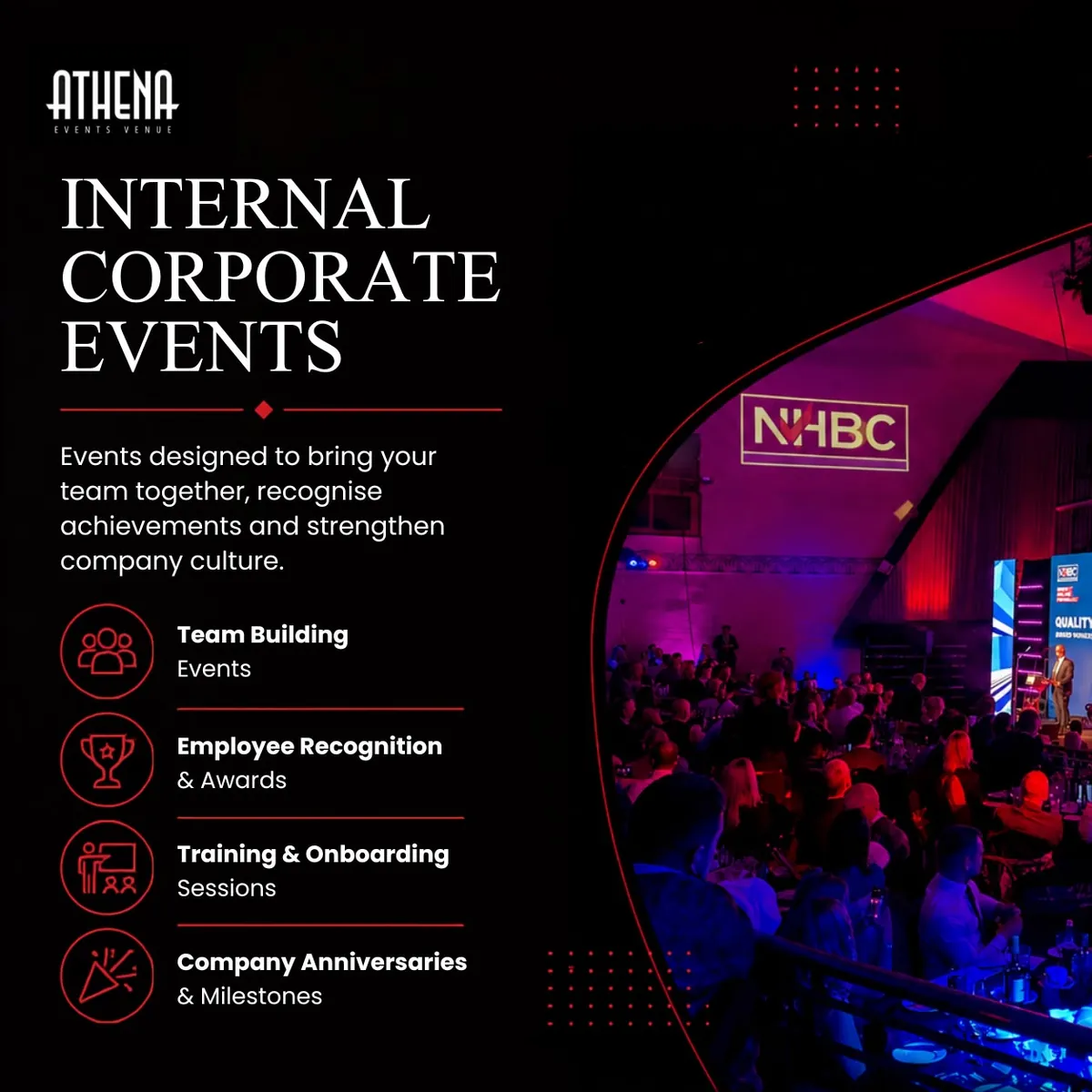
Team Building Events
Activities designed to strengthen collaboration and communication among employees, ranging from outdoor challenges to structured workshops. The goal isn't just entertainment; it's building trust between people who work together daily.

Employee Recognition and Awards
Events built around celebrating individual or team achievements, whether that's a formal awards ceremony or a smaller in-house recognition session. These events reinforce what the business values and give visible credit to the people driving results.
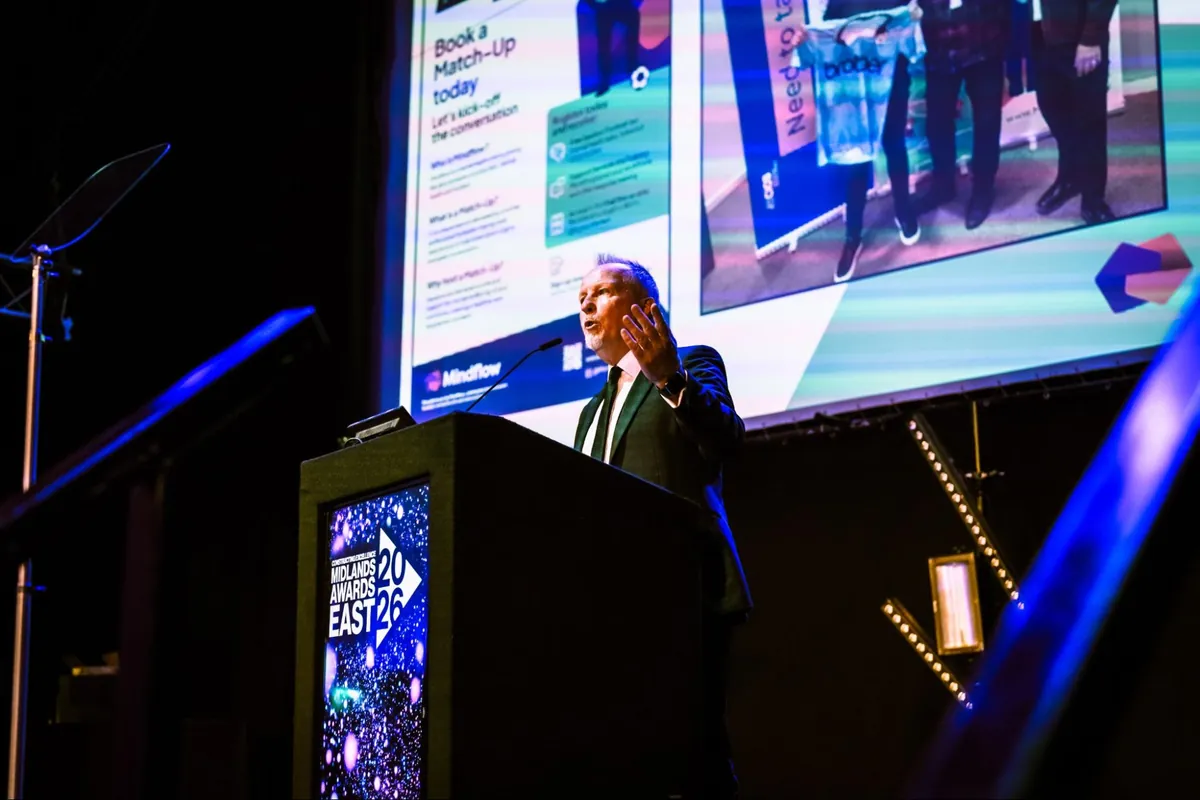
Training and Onboarding Sessions
Structured sessions focused on skill development, compliance training, or bringing new hires up to speed. These are usually smaller in scale but happen more frequently than other internal events.
Company Anniversaries and Milestones
Celebrations marking a business's founding date, a major achievement, or a significant milestone. These events often blend recognition with reflection, giving employees context on how far the company has come.

2. External Corporate Events
These are aimed at audiences outside the business, such as prospects, industry peers or the public.
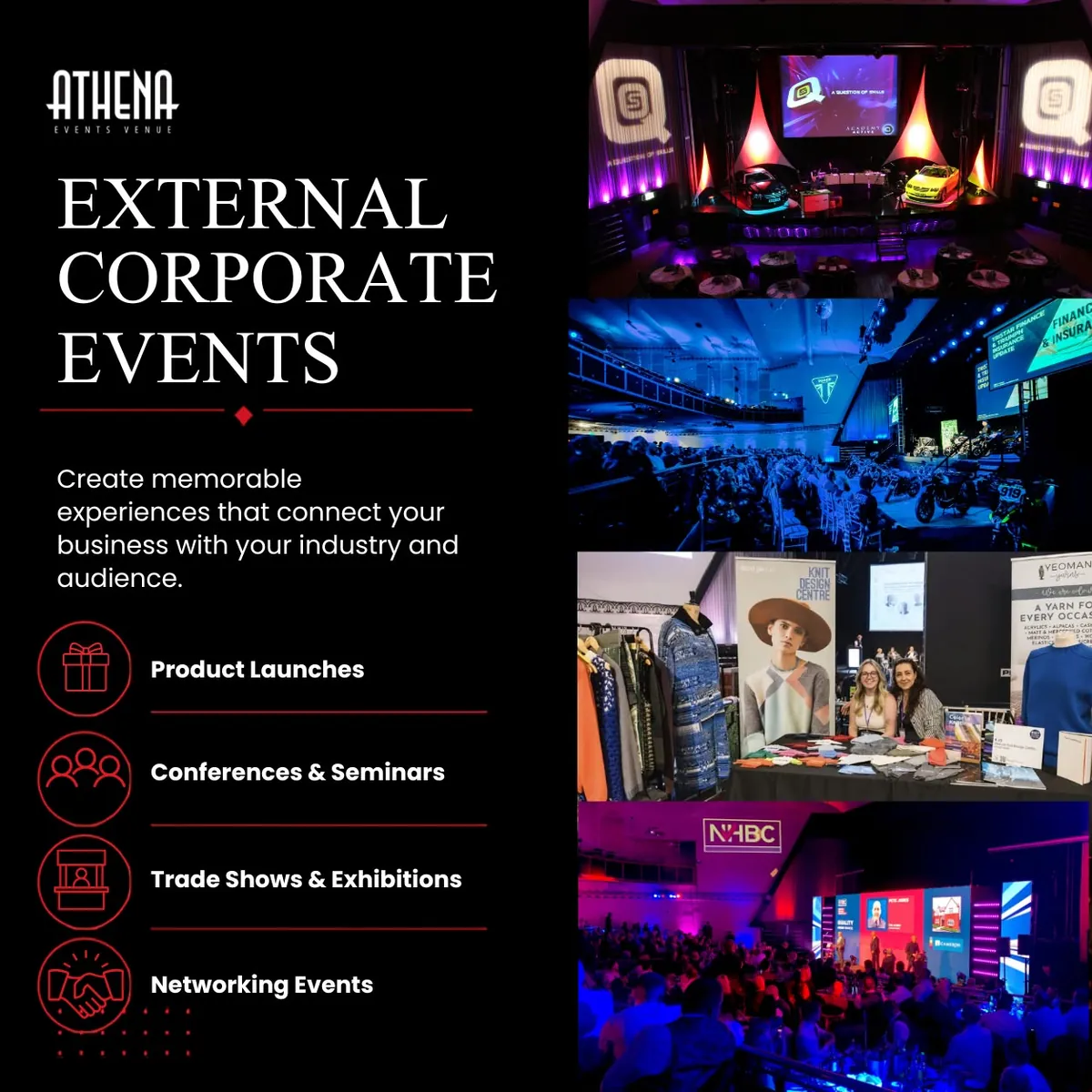
Product Launches
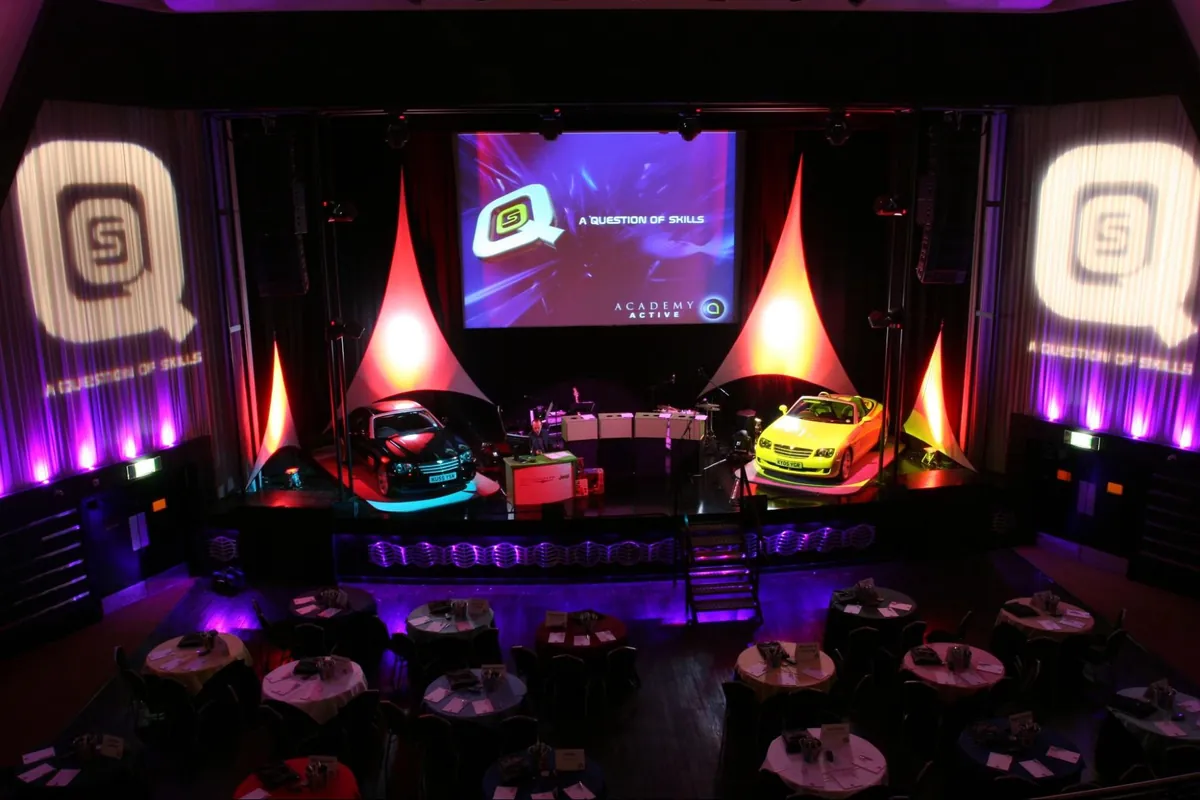
Events built around unveiling a new product or service to press, partners, and customers. The format ranges from small press briefings to large-scale showcase events, depending on the audience the business wants to reach.
Conferences and Seminars
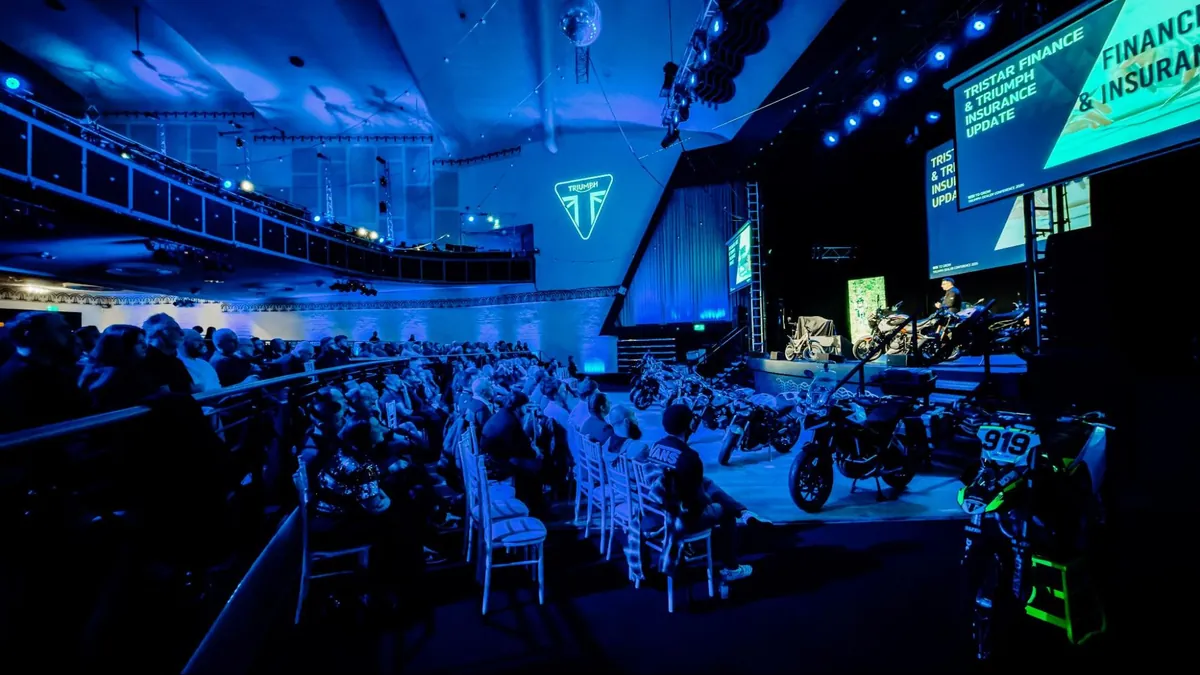
Larger gatherings focused on sharing knowledge, industry trends, or company expertise, often involving multiple speakers and sessions across a full day or more.
Trade Shows and Exhibitions
Events where multiple businesses showcase products or services to a shared audience, usually within an industry-specific setting. These are lead-generation focused, giving businesses direct access to prospective clients.

Networking Events
Gatherings designed specifically to help attendees build professional connections, often with a looser structure than a conference but still organised around a clear business purpose.

3. Client-Facing Events
These sit between internal and external, focused specifically on strengthening relationships with existing or prospective clients.
Client Appreciation Events
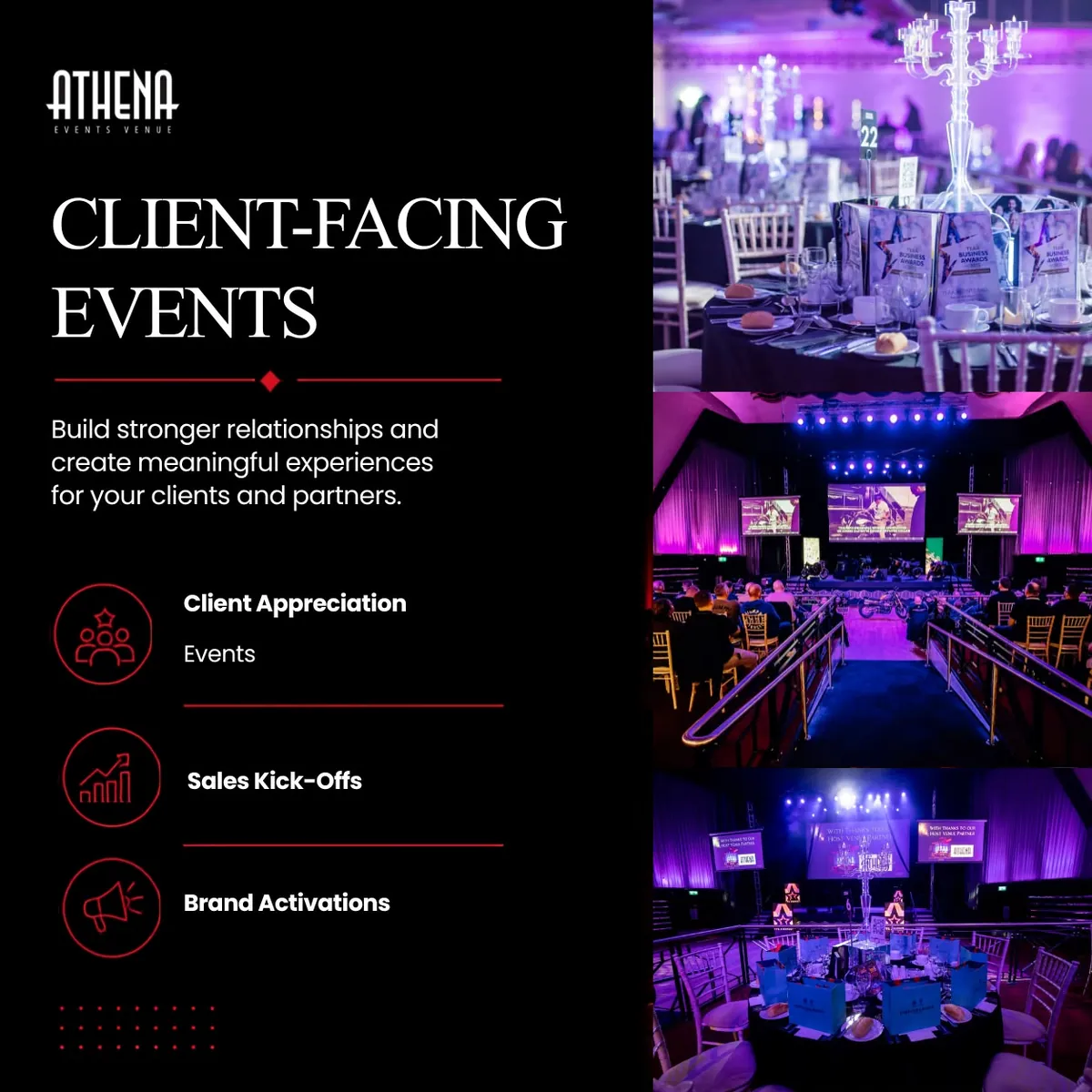
Events organised purely to thank clients for their business, usually hospitality-led rather than sales-driven. The goal is relationship building, not conversion.
Sales Kick-Offs
Events aimed at aligning sales teams on targets and strategy for the period ahead, typically held at the start of a quarter or financial year. Primarily internal, though they can include client-facing elements like guest speakers or case studies.
Brand Activations
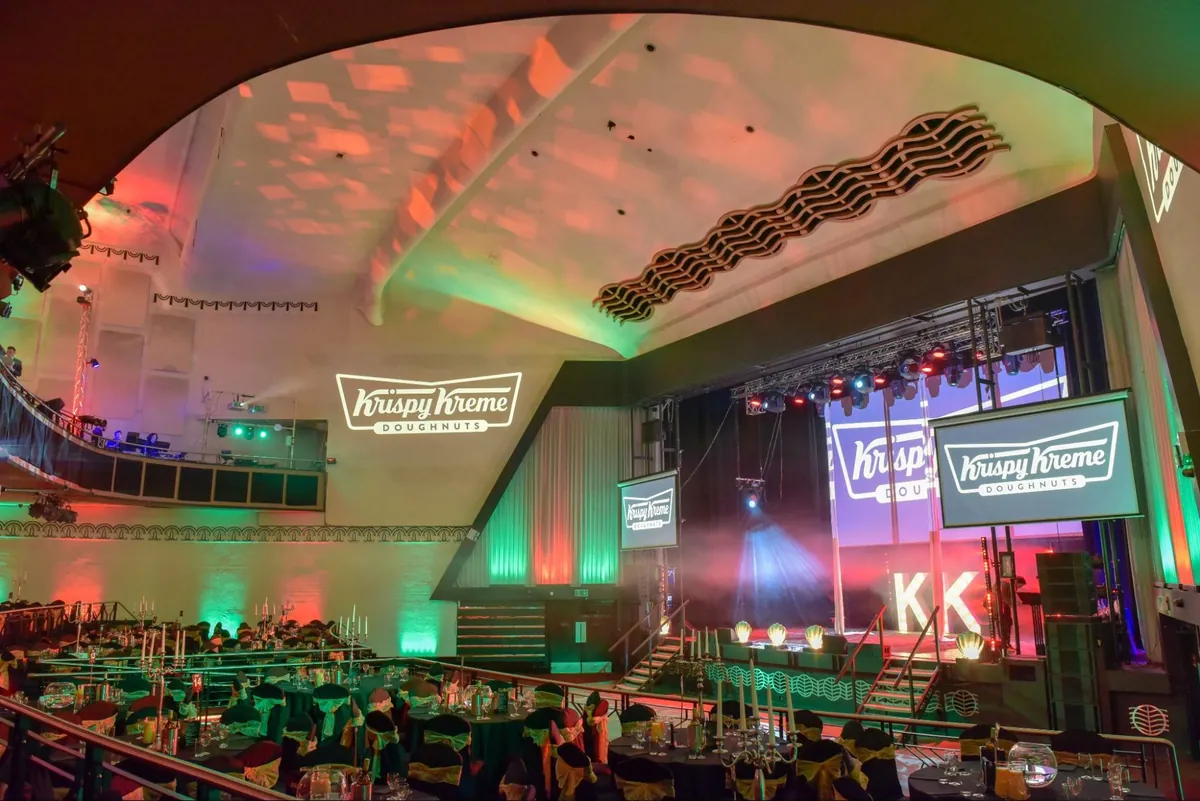
Experiential events built around putting a brand in front of an audience in a memorable way, often through an interactive space or pop-up rather than a stage presentation. Usually run alongside a bigger campaign or launch.
4. Hybrid and Virtual Corporate Events
With more businesses operating across locations, some corporate events are now built to reach both in-person and remote audiences.
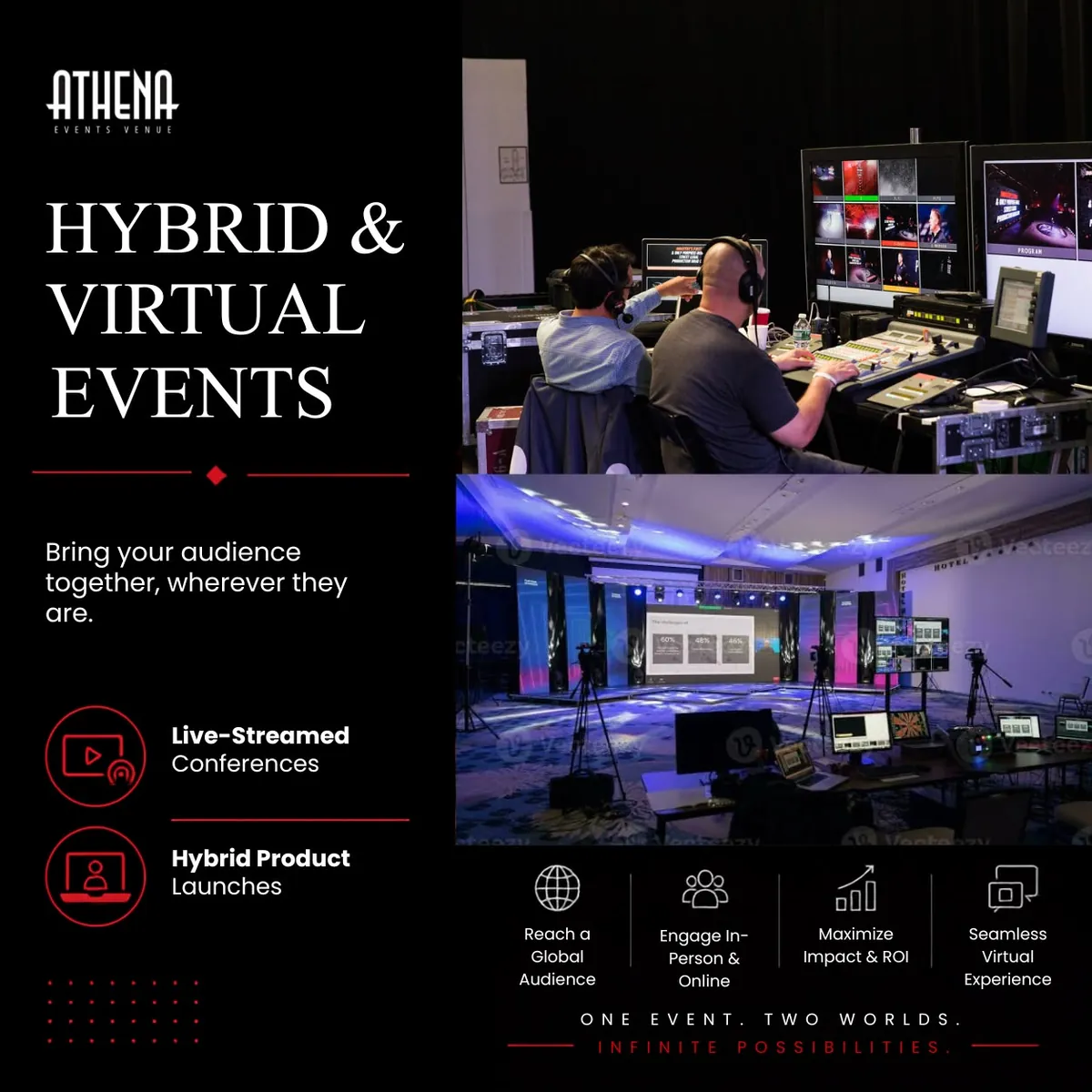
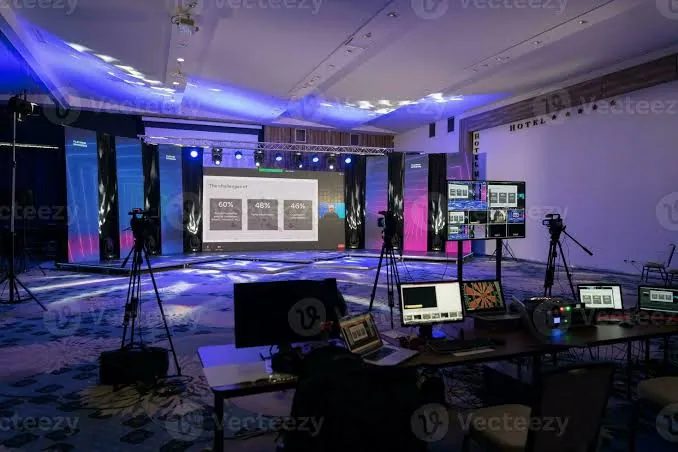
Live-Streamed Conferences
Conferences that combine an in-person audience with a live online stream, extending the reach of the event beyond people who can physically attend.
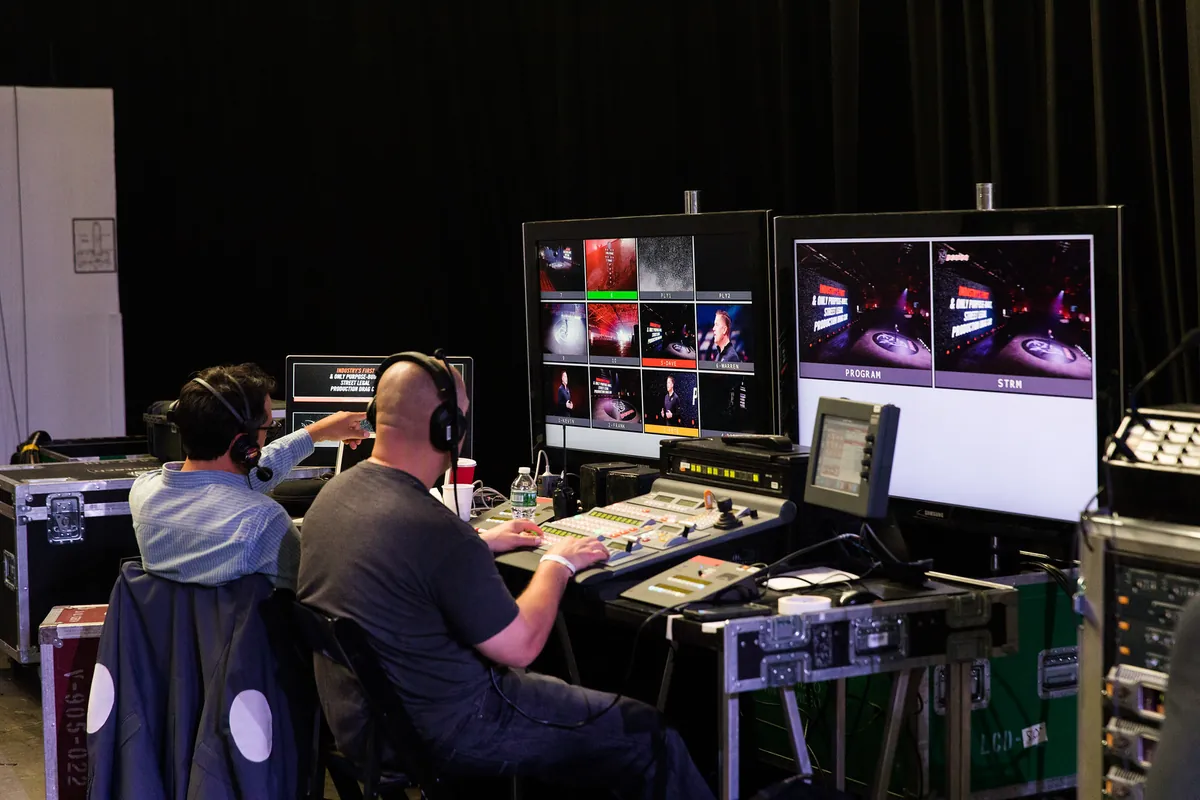
Hybrid Product Launches
Product launches are structured for both physical attendees and a remote audience watching online, often used when the business wants broad reach without limiting the in-person experience.
How to Choose the Right Type of Corporate Event
With so many formats to choose from, picking the right one comes down to a few practical questions rather than personal preference.
Match the Event Type to Your Business Objective
Start with what the event needs to achieve. If the goal is generating leads, a trade show or conference fits better than an internal training session. If it's employee retention, a recognition event or team outing will do more than a product launch ever could. The objective should decide the format, not the other way round.
Consider Audience Size and Format
A 20-person leadership offsite and a 500-person conference need entirely different venues, timelines and budgets. Before locking in a format, be clear on who's attending, how many people that is, and whether they're internal staff, external clients or a mix of both. This also determines whether the event should be in-person, hybrid or fully virtual.
Timing and Frequency
Some events are one-off, like a product launch or company milestone, while others need to be recurring, like quarterly sales kick-offs or annual award ceremonies. Knowing whether this is a single event or the start of a recurring calendar item affects how much you invest in planning infrastructure versus a one-time setup.
Internal Priorities vs External Perception
Internal events can be more flexible and cost-conscious since the audience is already invested in the business. External and client-facing events carry more weight, since they shape how the business is perceived by people outside it, and usually justify a higher spend on venue, presentation and execution.
Budget and Venue Considerations
Budget usually narrows the options fast. A venue with in-house AV, catering, and event support cuts down on the number of suppliers you need to manage, while a bare space keeps costs lower but adds logistical work. Venue capacity, location, and flexibility should be checked against the audience size and format decided earlier, not chosen first and worked backward from.
What Makes a Corporate Event Successful?
Choosing the right type of event is only the first step. Execution is what determines whether it actually delivers.
1. Clear Objectives and KPIs
Every successful corporate event starts with a defined outcome, whether that's leads generated, employee satisfaction scores or media coverage secured. Without a measurable goal, there's no way to judge whether the event actually worked, and no basis for improving the next one.
2. Venue and Logistics Planning
The venue sets the ceiling for what the event can deliver. Capacity, layout, AV capability, and location all need to match the format decided earlier, and logistics like catering, timing, and staffing need to be locked in well ahead of the date. Most things that go wrong at corporate events trace back to a logistics gap that wasn't caught early.
3. Guest Experience and Engagement
Attendance alone doesn't make an event successful; engagement does. That means the agenda holds attention, the format suits the audience, and there's enough interaction built in, whether that's networking time, Q&A, or hands-on sessions, rather than passive sitting and listening. An event people remember for the right reasons is one that's more likely to deliver on its original objective.
Final Thoughts
Corporate events come in more shapes than most people expect, and the right one for your business depends entirely on what you're trying to achieve. Get the type right, and everything else, venue, format, budget, becomes far easier to plan.
If you're looking to host a corporate event in the Midlands, Athena can help.
We've been hosting events from a few hundred to a few thousand attendees for decades, across conferences, awards nights, product launches, and everything in between. Whatever the scale or format, our team knows how to make it land.
Talk to our team today to start planning your next event.
FAQs
What is the difference between a corporate event and a business event?
The terms are largely used interchangeably, though "business event" is sometimes used more broadly to include things like client meetings or investor calls, while "corporate event" typically refers to a planned gathering with a defined format and guest list, such as a conference, launch or awards ceremony.
How far in advance should you plan a corporate event?
For smaller internal events, four to six weeks is usually enough. Larger external events like conferences, product launches or awards ceremonies need three to six months, sometimes longer if the venue, speakers or suppliers need to be booked well ahead.
What size venue do you need for a corporate event?
That depends entirely on the guest list and format. A training session might need space for 20 people, while a conference or awards night could need capacity for 500 to 1,000 or more. It's best to confirm attendee numbers before shortlisting venues, since capacity limits narrow the options fast.
What's the difference between an internal and external corporate event?
Internal events are organised for employees, with goals like training, morale or recognition. External events are aimed at clients, partners, media or the public, with goals like lead generation, brand visibility or relationship building.
Do corporate events need to be in-person?
No. Many corporate events now run as hybrid or fully virtual formats, especially conferences and product launches, to reach audiences who can't attend in person without limiting the experience for those who can.
What's the most common type of corporate event?
There's no single most common type; it varies by business and objective. That said, training sessions and internal meetings tend to happen most frequently, while conferences, awards ceremonies, and product launches are held less often but typically require far more planning.